


Light-It Up
4.613.40K Reviews
App Specs
- Version
- 1.9.5.6
- Updated On
- License
- Free
- Downloads
- 50,000,000+
- Developer
- CrazyLabs LTD
- Categories
- Arcade
- Platform
- Android, iOS
Screenshots


 Analysis by AppCompare
I like arcade games that explain themselves through play rather than a long tutorial, and Light-It Up gets to its point quickly: make a jump, judge the landing, and decide whether to risk a flip before moving on. That simplicity makes it easy to try in a spare moment, but the timing gives each attempt enough bite to make a clean run feel earned. It is a colorful, focused kind of challenge, not a sprawling game to settle into for a whole evening.
Who will enjoy this kind of challenge
I’d recommend it to anyone who likes short bursts of action, careful timing, and the satisfaction of improving through retries. The basic idea is easy to grasp, so it suits a casual player who wants to get moving without learning a complicated control scheme. It can also appeal to someone who enjoys chasing a better performance on a familiar level, since the route from one glowing shape to the next invites small experiments rather than just frantic tapping.
It is less suitable if you want a story-led adventure, a slow puzzle game, or a forgiving experience where mistakes rarely interrupt your progress. The obstacles make precision matter, and repeating a section is part of the deal. If you tend to find retries irritating rather than motivating, a more relaxed arcade game may be a better fit. I also wouldn’t choose it when I want deep strategic systems; its appeal is in immediate movement and quick decisions.
A useful way to play between other things
Picture waiting for a friend who is running late. You have a few minutes, don’t want to start a long match, and need something that makes sense as soon as you open it. This is the sort of gap where I’d use Light-It Up: attempt a level, learn where a jump went wrong, and either try again or put the phone away when the wait ends. Because a run is built around individual landings, it is easy to pause your attention between attempts instead of having to keep up with a long sequence of events.
For a better first run, I’d focus on landing safely before trying to flip for extra points. A flip may look stylish, but it is only useful when you can still control the next landing. Once a stretch feels familiar, add flips where there is enough room to recover. This small change in priorities helps separate a deliberate attempt from one where every jump becomes a gamble, and it makes it easier to tell whether a failure came from a risky trick or a mistimed basic jump.
How it sits among arcade games
Compared with endless runners, this feels more like a sequence of compact platforming challenges than a test of how long you can survive while the scenery rushes past. You are reacting to shapes, gaps, and obstacles, then adjusting your timing for the next move. Compared with score-chasing arcade games built around rapid repeated taps, its flips and landings ask for a little more judgment. That makes the action feel active without demanding the constant input of a faster, busier game.
The trade-off is that its appeal depends on enjoying this narrow loop. It doesn’t offer the variety of a collection of arcade modes; the interest comes from working through different arrangements and getting more confident with the same central actions. I find that focused design refreshing when I want one clear task, but I would switch to a broader game if I wanted several different activities in one app.
Worth Reading Before You Choose

EA SPORTS FC Mobile 26 Is a Bigger Football Game, but It Takes Time

Flipboard Shows What News Apps Must Do Beyond the Feed

Switching to Android Auto Means Rethinking Your Driving Routine

Google Calendar Makes a Crowded Week Easier to Manage

Ludo King Makes the Most of the Minutes Between Plans

Baby Panda World Brings Quick Play to Modern Phones, but Its Game Library Feels Busy
What to know before installing
CrazyLabs LTD developed this free arcade game, which has a 4.6 average from around 217,000 ratings and over 50 million installs. It is rated Everyone, so its stated age category is broad, and the current version is 1.9.5.4. Optional in-app purchases range from $0.99 to $19.99 per item. I’d treat the free entry point as a chance to see whether the movement and retries suit you before spending anything; the core reason to play is the timing challenge, not a need to buy into it.
On Android, the stated minimum operating-system requirement is version 7.0. That makes the compatibility check straightforward for people using an older device: confirm the phone meets that requirement before downloading. The game also dates back to December 20, 2018, which helps set expectations: this is an established mobile arcade title, not a brand-new release whose appeal depends on novelty. If you want a familiar, self-contained play pattern, that can be a plus; if you only want the latest seasonal content, it may not be the reason to choose it.
Jumping into the World of Neon
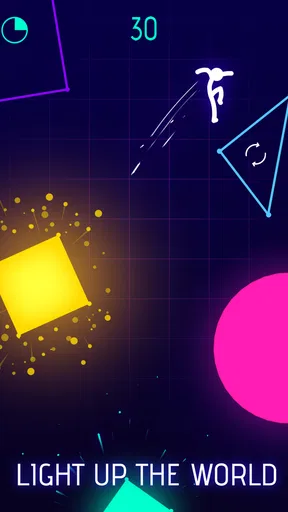
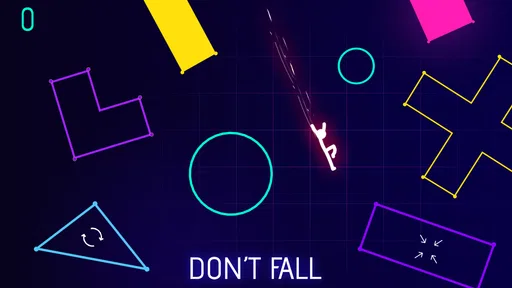
Right from the get-go, Light-It Up pulls you into a vibrant universe filled with glowing shapes and endless possibilities. The concept is pretty simple — you control a stickman whose mission is to jump from shape to shape, lighting them up as you go. It's like parkour, but in a world that seems to be designed by a disco-loving artist.
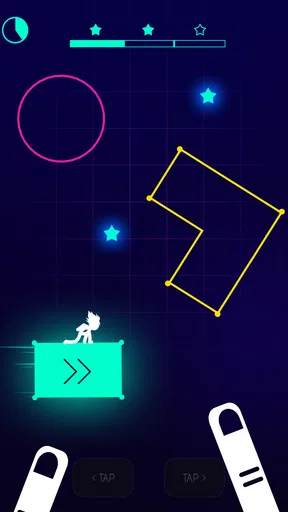
The controls are as intuitive as they come. You just have to tap the screen to make your stickman jump, and you can swipe to perform flips. The flips are not just for show; they actually help you gain extra points and, let's be honest, they look super cool. It’s the kind of game where you can lose track of time because you’re so focused on mastering the art of the perfect jump.
The Challenge is Real
As you progress, the levels become more intricate and challenging. New obstacles like spikes and moving shapes are introduced, keeping you on your toes. It’s the perfect balance of frustration and satisfaction. You might find yourself repeating a level a few times, but when you finally nail it, the triumph feels oh-so-rewarding.
One of the things I love about Light-It Up is how it manages to keep things fresh. Each level is a new puzzle to solve, with different shapes and patterns. This keeps you engaged and prevents the game from feeling repetitive. Plus, the soundtrack is a total vibe — upbeat and energizing, it pairs perfectly with the neon visuals.
Visuals and Gameplay
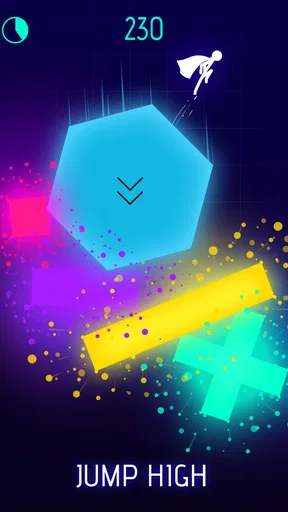
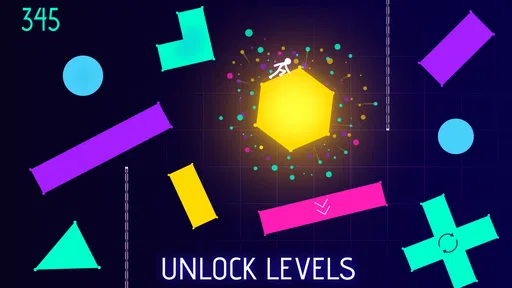
The game’s aesthetics are a standout feature. Each shape lights up in a burst of color when you land on it, creating a dazzling light show on your screen. It’s a feast for your eyes and a delight to play. The simplicity of the graphics combined with the dynamic lighting effects makes it visually appealing without overloading your senses.
But let’s talk about the stickman for a moment. This little guy is practically a gymnast, and watching him flip through the air is oddly satisfying. It’s the kind of game where you can’t help but smile as you play, especially when you pull off a series of flawless jumps.
What Keeps Me Coming Back
There’s something inherently addictive about Light-It Up. Maybe it’s the challenge of beating your own high score, or perhaps it’s the satisfaction of lighting up every shape in a level. Whatever it is, this game has a way of drawing you back in for just one more round. And let’s be real, it’s the perfect distraction when you need a short break from reality.
Another thing worth mentioning is the game’s accessibility. It’s easy to pick up for a few minutes or get lost in for an hour. Whether you’re on a quick commute or lounging at home, Light-It Up fits perfectly into any schedule.
Reading the rhythm of a run
The most useful feedback comes from the contrast between a successful landing and a missed one. When a shape lights up beneath the stickman, it gives a clear sense of progress; when an obstacle interrupts the route, it tells you that the timing or approach needs adjusting. I find it helps to change just one thing after a failed attempt. If I rushed the jump, I wait a beat longer; if I tried to squeeze in a flip, I first repeat the landing without it. That makes retries feel like practice instead of guesswork.
There is also a visual trade-off here. The neon effects make movement easy to follow and give each landing a satisfying payoff, but players who prefer muted screens or realistic environments may find the presentation too bright. I enjoy the contrast because it makes the route legible, though I would not call this a low-key game to play when I want a quiet, subdued mood.
Making each attempt count
A practical habit is to treat the first pass through an unfamiliar arrangement as reconnaissance. I pay attention to where the moving shapes are heading and which landing spots leave room for the next jump, rather than trying to collect every possible point immediately. On a later attempt, I can add a flip when the route feels predictable. This approach is especially useful when spikes sit near a landing: the bonus is not worth much if it makes the next move harder to judge.
The reward is not only a score or a finished stretch. There is a small, immediate pleasure in watching a dark shape become bright after a solid landing, followed by the sense that the next part is now within reach. That visual response helps the game feel lively even when I am replaying a section. Still, it is a modest reward loop, not a substitute for unlocking a large world or following a story, so players who need bigger milestones may lose interest sooner.
Choosing the right moment to stop
The retry structure is a strength when I have a little time and a clear goal, but it can also encourage me to keep saying “one more go” after a mistake. I set a simple limit for myself when I am playing during a short break: if I am no longer changing my approach and am just repeating the same rushed jump, I stop and return later. A fresh attempt often feels more useful than pressing on while annoyed, especially in a game where a tiny timing adjustment can make a difference.
For a commute, I would save it for a point when I can look at the screen and concentrate on the landing, rather than trying to play while distracted by boarding or navigating a crowded space. The controls are simple, but the obstacle patterns still reward attention. At home, it works well as a palate cleanser between longer games; it asks for more precision than a mindless tapping diversion, yet less commitment than a campaign that expects me to remember a plot or manage several systems.
Where the loop succeeds—and where it doesn’t
The action is a jump or flip, the feedback is a landing that lights a shape or a mistake that sends me back to rethink the timing, and the reward is a cleaner run and the visual pleasure of completing the route. Then the reset gives me a direct reason to try again: I know which move I want to improve. That is a satisfying arcade loop when I am in the mood to refine a small skill. It is less compelling when I want constant novelty, extensive customization, or a long-term goal beyond getting better at the next sequence.
If you are wondering whether it is friendly to a first-time player, I’d say the basic controls are approachable, but the obstacles mean it still expects patience. If you are wondering whether it is better for a quick break or a longer session, I think it works for both, provided you are comfortable replaying sections. And if you are choosing between this and a more conventional endless runner, pick this one when you want deliberate landings and flips; pick the runner when you would rather react continuously to a scrolling path.
Wrapping It Up
If you’re on the hunt for a game that’s both challenging and a feast for the senses, Light-It Up is definitely worth checking out. The combination of intuitive controls, stunning visuals, and addictive gameplay makes it a standout in the mobile gaming world. So, go ahead and light it up — your stickman is waiting for you to guide him through his neon adventure.
And hey, who doesn’t need a little extra color in their life? You can find Light-It Up available for download on both Android and iOS. Whether you're a casual gamer or a dedicated player, this game promises to brighten up your day, one jump at a time.
Pros
- Intuitive controls make gameplay smooth.
- Visually stunning with vibrant graphics.
- Creative levels keep you engaged.
- Quick load times enhance experience.
- Suitable for all age groups.
Cons
- Some levels can feel repetitive.
- Ads can interrupt the flow of play.
- Limited free content without purchase.
- Occasional lag on older devices.
- Might be too simple for hardcore gamers.
FAQs for Light-It Up
What is the main objective of Light-It Up?
In Light-It Up, the primary goal is to illuminate geometric shapes by jumping from one to another. Players must strategically move their stick figure character to light up all shapes within a level, using precision and timing to avoid falling or missing a jump.
Is Light-It Up free to play, and are there in-app purchases?
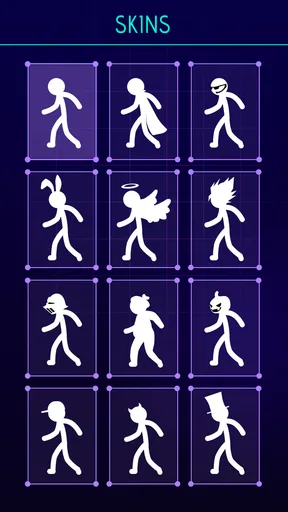
Light-It Up is free to download and play, but it offers in-app purchases. These purchases typically include items such as additional lives, power-ups, or cosmetic skins that enhance gameplay. While not necessary to complete the game, they can provide a more engaging experience for some players.
What are the system requirements for Light-It Up on Android and iOS?
For Android users, Light-It Up requires Android version 4.1 or higher. iOS users need to have iOS 9.0 or later. The game is lightweight, making it compatible with most modern smartphones and tablets, ensuring a smooth gaming experience without significant hardware demands.
Does Light-It Up require an internet connection to play?
Light-It Up can be played offline without an internet connection, making it ideal for gaming on the go. However, an internet connection may be necessary for certain features, such as purchasing in-app items or accessing leaderboards and achievements.
Are there any accessibility features in Light-It Up?
While Light-It Up focuses on simple controls and vibrant visuals, it currently lacks specific accessibility features like screen readers or customizable controls. The game’s intuitive design aims to be user-friendly, but players with specific accessibility needs might find limited options available.


